Case Study 01Project Recruit
Generative field research inside hospital systems that turned an ignored product into a company-wide strategic pivot with a $13M impact
ROLELead UX Researcher (IC)
TIMELINE6 Weeks
METHODSParticipatory Design
Dot Voting
Journey Mapping
Viz.AI
Company Viz.ai is an AI-powered clinical workflow platform known for real-time stroke detection. Viz Recruit was a clinical trial recruitment tool that was functional but suffered from low-engagement. As a result, it was largely amongst more successful products. A sizable infusion of sponsor funding created pressure to make the product more profitable.
Leadership needed to understand: what does this product need to be worth the investment?
The Challenge
TL;DR
What I did: Through co-design workshops, I mapped the end-to-end journey of clinical trial management. Our expert participants identified tasks related to reporting and data entry as the most friction-heavy steps in the journey.
How it delivered: I recommended the team invest in Electronic Health Record (EHR) integration infrastructure to automate some of the data entry and incentivize Research Coordinators to manage reporting through the Recruit app. This strategic investment tracked back to $13M ARR for the company.
What are the most significant pain points across the full clinical trial workflow?
Where is Recruit adding value today and where is it falling short?
What automation opportunities would have the highest impact on research coordinators and Principal Investigators?
What would it take to make Recruit indispensable?
Core Questions
My Approach
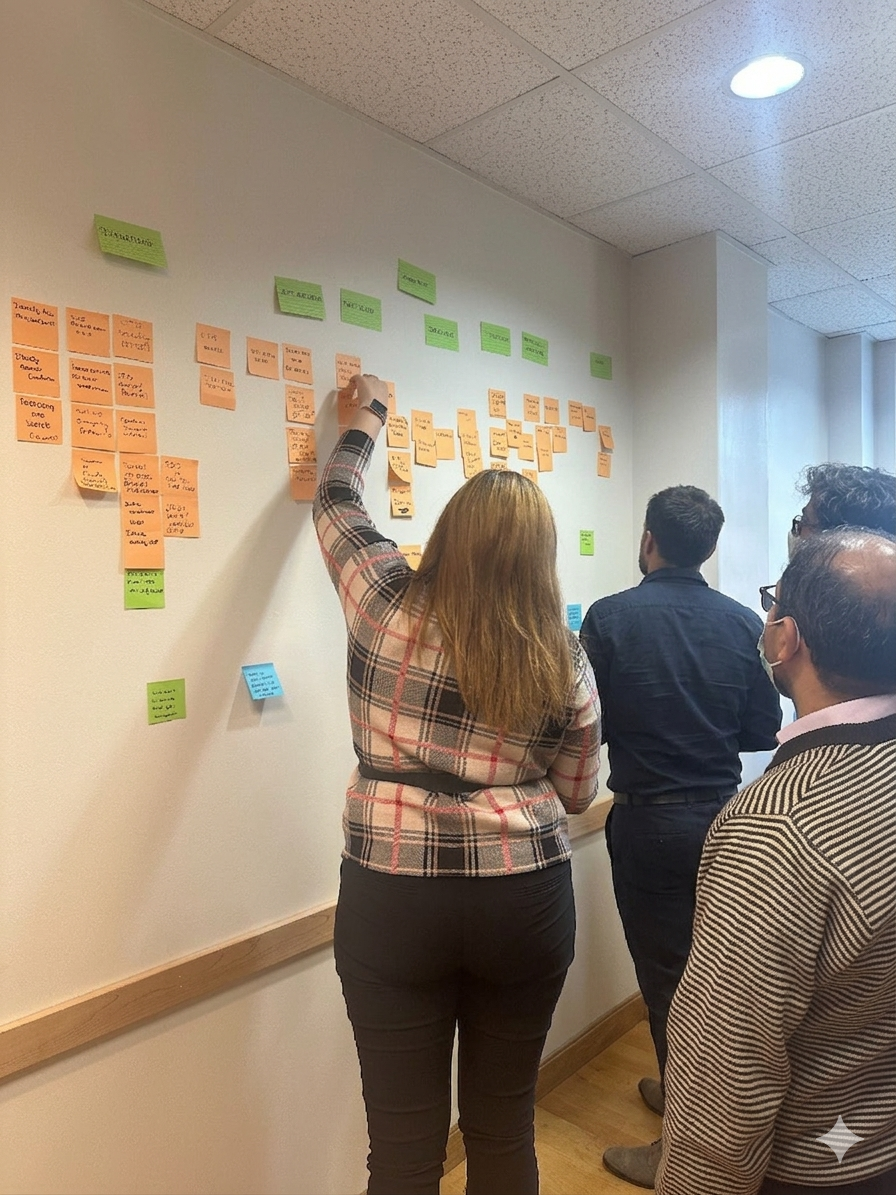
I designed and facilitated two on-site participatory design workshops across two hospital systems — one a well-resourced academic hospital, the other a community hospital with limited research funding. This contrast let us understand the full spectrum of user needs.
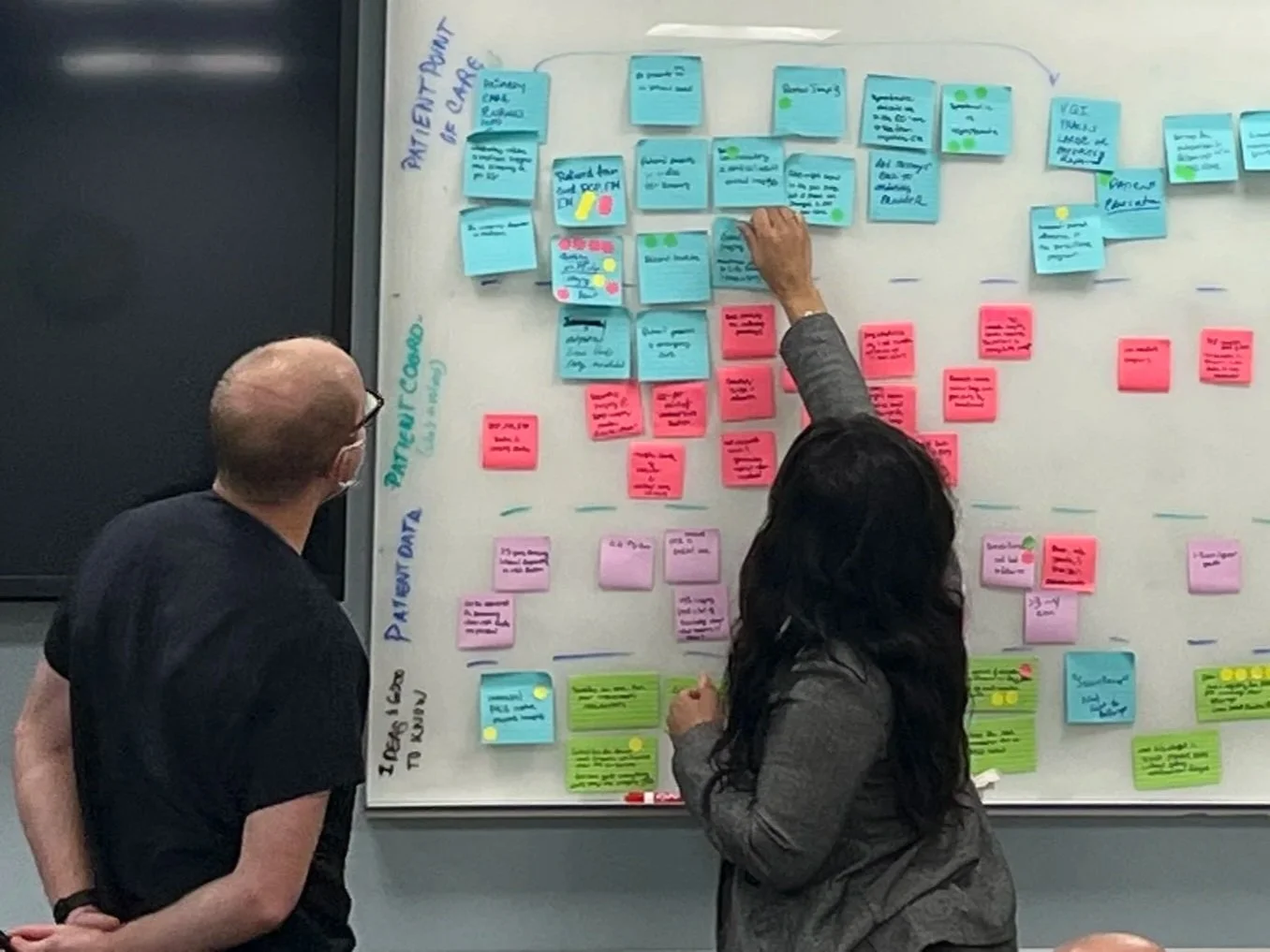
16 clinicians and research coordinators mapped their end-to-end clinical trial workflow across all three phases (Planning, Enrollment, Reporting), surfacing pain points and workarounds. We layered backstage processes and system touchpoints onto their journeys to identify where Recruit could add value. Participants then voted on the most critical opportunity areas using dot voting, giving us a prioritized signal directly from the people doing the work.
The workshop had to accommodate busy clinical schedules — some participants could only commit to 15 minutes, so I structured it as a drop-in format where each person could build upon the existing journey map throughout the day.
Insights
The Unifying Insight: EHR Integration
Recruit was laser-focused on the enrollment workflow, but the real pain lived in reporting workflow — all the data entry and manual tracking that consumed coordinators' time.
Three distinct pain points all converged on the same architectural need:
Capturing clinical data: Coordinators physically attended appointments to capture protocol-compliant data because clinical staff didn't record it correctly
Tracking participant progress: No single source of truth — data scattered across EHRs, physical binders, spreadsheets, and internal databases
Automating pre-screening: Manual chart review was the bottleneck in identifying eligible patients
All of these pain points could be addressed by investing in the architecture for EHR integration. Other products in the company’s portfolio also had EHR integration on their radar, but there was no capital for the investment, so it remained a backlogged request.
However, with Recruit’s sponsor investment, the opportunity presented itself to invest. Leadership had the confidence to pursue the innovation because the research showed that EHR integration would increase engagement in Recruit and satisfy its sponsor.
The investment in one product had a trickle-down effect for the entire product suite, and the research I conducted enabled that.
Impact and Milestones
100% of Recommendations Made the Roadmap
Because the PM and I co-created the roadmap together during the research process, insights weren't handed off because they were built in from the start
EHR Integration Adopted Company-Wide
The findings became the catalyst to push EHR integration across its entire product suite, adopted as a key selling point in their new subscription model
A Neglected Product Drove $13M ARR
Viz Recruit went from the unloved child in the portfolio to proof of concept for their expanded go-to-market strategy, directly contributing to $13M in Annual Recurring Revenue
👀 Behind-the-Scenes
I spent three weeks planning before the two-day workshops. My team. (a Product Manager and a Business Development Analyst) had never conducted structured research, so I trained them to co-facilitate.
Teaching is a big part of my process, and I was proud to watch my teammates go from overwhelmed on day 1 to confident and in control on day 2.
The workshops had to be flexible enough to accommodate vastly different hospital operations while consistent enough to compare outputs side-by-side.
By employing a drop-in structure, I ensured each participant could contribute meaningfully, even with limited time.