
Case Study 02FABRIC
Concept-testing a new member support system for a FinTech startup for small business owners during organizational change
ROLESenior UX Researcher (contract)
TIMELINE6 weeks
METHODSUser Interviews
Change Management
Concept Testing
Financial Services Startup
Company A Series A fintech platform serving self-employed professionals and small businesses needed to transition from an email-based support system to an in-app messaging center powered by Zendesk. Member growth had outpaced their customer service model, and leadership needed a change management strategy to minimize churn risk during the rollout.
The Challenge
Core Questions
How do members feel about switching from email to an in-app ticketing system?
What is the likelihood they'd use the new system over the familiar email workflow?
What are the biggest churn risks and how do we mitigate them?
How well does the proposed escalation framework match members' mental models?
My Approach
I conducted 10 remote 60-minute sessions combining structured interviews with concept testing. The first half explored current support habits, Member Relationship Manager (MRM) relationships, and pain points. Then I tested a clickable Figma prototype showing three levels of support escalation, asking participants to rate likelihood of adoption at each level using a 5-point scale.
I closed each session with three real-world pressure test scenarios — like discovering a tax return mistake right before the filing deadline — to validate whether the escalation framework matched how users would naturally navigate the system.
Key Insight: The Trust Gap
High-utilization members posed the greatest churn risk — not because of the product change itself, but because of a gap in trust. Both the old and new systems felt like a "black box" where customers never knew who would respond to their request.
"I want to ask a question and know Dan's answering, but if he has no recognition of previous conversations... If I have to re-explain myself, that's gonna piss me off."
Customers wanted to know:
Who is responding?
Do they know my context and history?
Is there a clear path to escalate if I'm not satisfied?
Key Findings
Transparency over convenience: Users valued knowing who they were talking to and seeing their support history more than they cared about the channel (email vs. in-app)
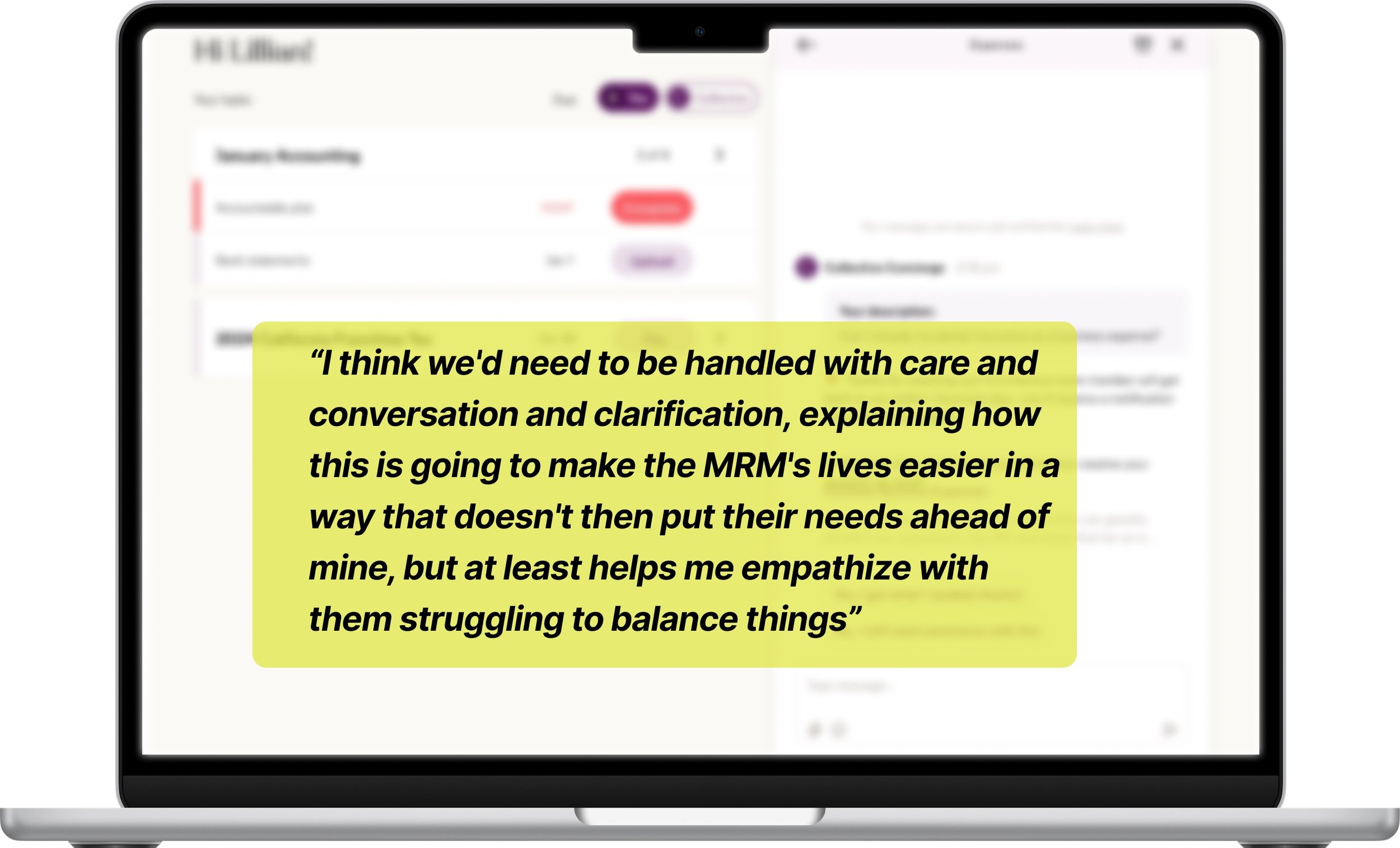
Focus on gains, not just change: Members empathized with MRMs being overwhelmed during tax season. The rollout was an opportunity to demonstrate the company was addressing the problem by introducing efficiency
Behavioral design matters: Loss aversion meant we needed to meaningfully message the gains — particularly that tax experts would be more available — not just announce the change
Impact and Milestones
Prevented Potential Churn
Findings directly shaped how the company communicated the IMC to members. Marketing reframed the launch as a "tax season support upgrade" rather than a system change
Phased Rollout with Risk Monitoring
Recommended monitoring high-utilization segments closely post-launch, which influenced the rollout timeline and escalation path design
Content Strategy Delivered
Auto-response copy was rewritten to reduce anxiety. Routing transparency added. Display names updated to include expertise titles (e.g., 'Janet, Tax Specialist')
👀 Behind-the-Scenes
Stakeholder interviews surfaced tension between cross-functional teams. Mid-project, the company announced layoffs impacting the design org.
Rather than funneling findings only to the hiring director, I published insights and updates to a shared Slack channel accessible to all stakeholders — including the CEO.
In a politically charged environment, keeping the research neutral and accessible was the only way to preserve its value and encourage teams to act on the insights.